Comment

Twelve years

For most university students in the United States, it takes four - or possibly five - years to get their diploma.


It took me twelve.¹


To be fair, it's not as if I spent all that time studying. I didn't fail any classes,² changed my major only once, and generally got good grades while I was studying.
But all that being said, it took me until yesterday - Friday - to obtain a copy of my diploma, nearly twelve years after beginning my undergraduate program.


There's a long story behind why it took me that long. There always is. I won't bore you with mine here.³


The real story - the one that matters in the here and now - is that I needed a copy of my diploma in order to be officially, finally, formally accepted into a study program in Riga this fall. Which I needed in order to get a student visa. Which I needed in order to be able to return to Riga. Which I needed to do because, well, that's where I'm supposed to be. Or something like that.

I had originally been told that I had until September fifteenth to provide a copy of my diploma. No problem. I was told it could take up to thirty days for my university to process and issue my official diploma, and I had submitted my request in late July, so I wasn't even worried about it. There have been more than enough other things going on to occupy my mind in the past six weeks or so; worrying about when my diploma would arrive took a back seat to more urgent matters.


Until this week.


After submitting my application for a residence permit last Friday, I re-read the study contract from the university that I had signed and submitted. I happened to notice that they had changed - without informing me - the deadline for submitting a copy of my diploma from September fifteenth to August thirty-first.


Huh.


I called my university to ask where my diploma was. "It's at the printers; it should be back sometime soon." Soon, eh? Great. As in, Friday soon? My-entire-application-falls-apart-if-this-doesn't-show-up-now soon?

There's been enough drama and last-second decisions in this process that I've grown strangely comfortable with uncertainty. I've seen things fall apart at the last second, and also seen things come together beautifully just in the nick of time. I've come to realize that there is a certain burden of personal responsibility - I can't ever expect destiny to drag me along - but at the end of the day, there is only so much I can do. I can't enable the impossible, but I can be ready in case it happens.

So, I did what I could. I made some calls, sent some emails, and hoped and prayed that it would turn up in time. I tried to find the balance between trusting that God could indeed make this happen and the possibility that it might not come together.


As it turned out, everything worked out. My diploma turned up in time, and I managed to forward a scanned copy of it to the university in Riga on Friday.


Just in time.


There's still plenty of things that could go wrong. I'm still waiting for the results of my residence permit application,⁴ and there's always the chance that the whole thing could fall completely apart at the last second. That eventuality seems unlikely, seeing as how far along I've come, and how much God has done, in order to keep this whole process alive. I hope, pray, and plead for a swift return. But until I'm actually back home in Riga, I have no certainty about how this situation will resolve itself.


Twelve years ago, I started my undergraduate studies. I thought it would take four years - maybe less! - to finish. Obviously, that didn't happen. The road to a bachelors degree had a few more roadblocks and detours than I could have possibly anticipated. And yet, in the end, it happened. Not in my envisioned timeframe, to be sure... but it happened nonetheless. And the pain and frustration in that journey ended up being a source of deep growth and maturation


My path to Latvia has had its share of detours and delays. This is just another chapter in that story. The journey is often as integral as the destination, and because of that I'm trying to use this time in England as best as I can, seeking to understand how and why the Lord has chosen to engineer this process in the way he has.


¹This is as good a place as any to insert the quote from Tommy Boy that I know you're already thinking of:
   Tommy: "You know, a lot of people go to college for seven years."
   Richard: "I know, they're called doctors."
²With one exception: I got an F in "Broadcast Clinic" class, which I failed it because I never realized I was enrolled in it, and thus did nothing . Oops.
³It involves a radio station being sold, driving to Alaska, learning to surf, and thirty dollars, in roughly that order.
Only thirteen days left - possibly less! - until I receive a decision on my application.

Comment

1 Comment

Alligators

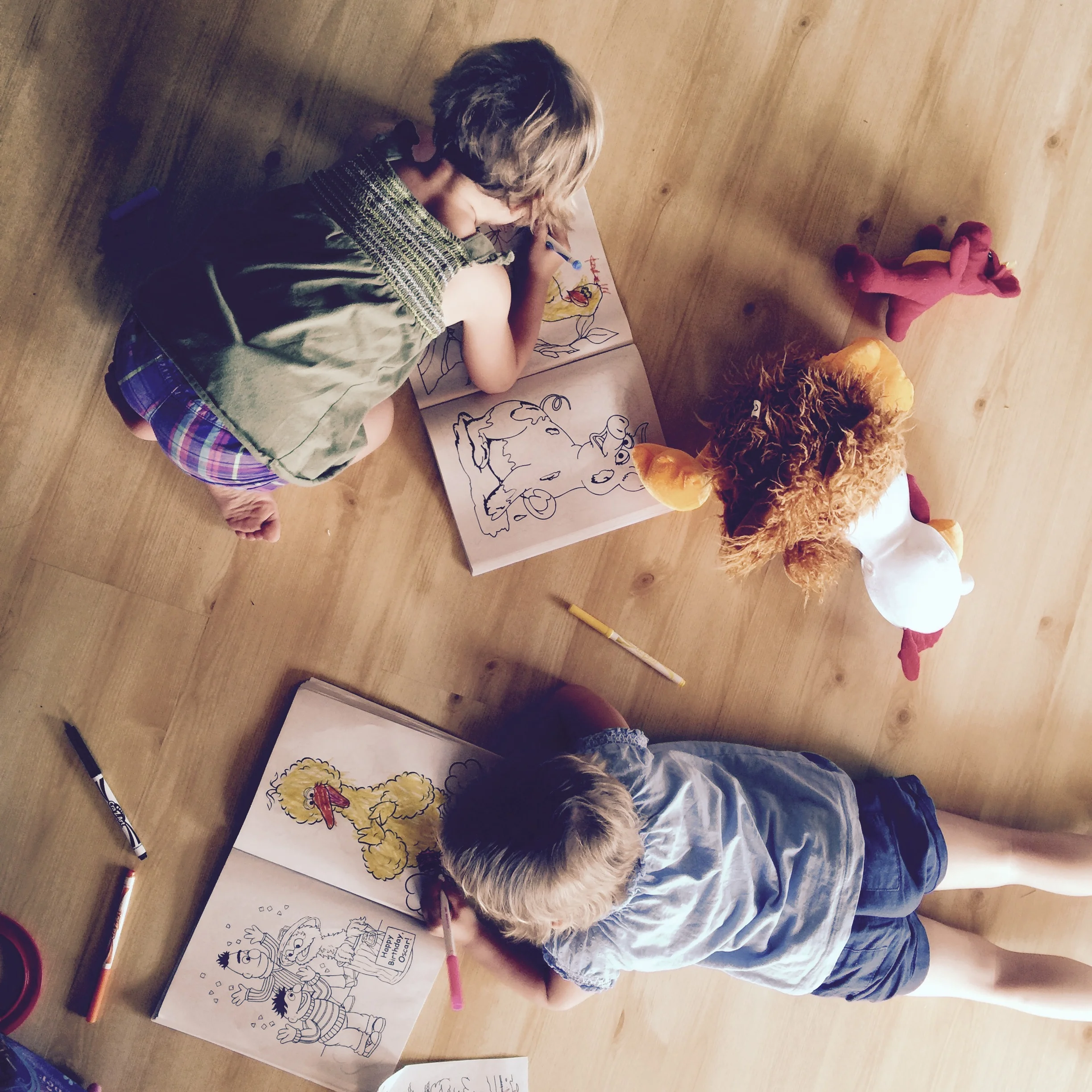
The family that I'm staying with here in England has a young boy, closing in on his fourth birthday. I've known him since he was just a couple months old, so it's safe to say we go way back. At some point during my current sojourn here, I made either a brilliant discovery or a fatal mistake, by conceptualizing and introducing a game which has come to be known in the household - and, to a certain extent, in the local community - as "Alligators."

Alligators is devilishly simple. One person - the alligator - chases the other person - the not-alligator - around the house, the garden, etc. until either the non-alligator decides they want to be the alligator, a scheduling conflict with a meal or bedtime occurs (for either party), or Fireman Sam comes on the telly.

One of the beauties about Alligators is that it allows for multiple variations. For example, there's "Alligator Hide and Seek" (in which the alligator hides, and then chases the not-alligator around the house as soon as they are discovered), "Alligator Dance Party" (needs no description), and "Alligators Resting Quietly on the Floor Taking 'Pretend' Naps." The permutations are almost as endless as the enthusiasm displayed by the young alligator for this particular game.

Alligators has now invaded every phase of household life. When someone is reluctant to eat their peas at dinner, the unsubstantiated - and yet unable to be readily disproven - fact that "Alligators love peas, it's what helps them stay green" is cited.¹ Running in a zig-zag is encouraged, so as to enable a not-alligator to more easily escape the swift-in-a-straight-line, but slow-to-turn alligator in pursuit.² An alligator t-shirt was even recently acquired for the young 'gator by his mother, which has only served to increase his fervor for the game.

The one downside to all this enthusiasm for a game that, I must admit, I take no small delight in playing myself, is that there's no "off" switch. It's hard for him to understand why I'm not available all hours, every day, to play Alligators. And sometimes it's hard for me to explain why while being both truthful and persuasive. 

Y.A. (young alligator), upon hearing my footsteps coming down the stairs in the morning: "Patrick! Can you play Alligators!
O.A. (old alligator, aka me): "Um, sorry, I can't right now.
Y.A.: "Why?"
O.S.: "I've got some things I have to do before I can play Alligators this morning."³
Y.A: "Okay, maybe in five minutes you can play?"


To his credit, he's fairly understanding for a young boy not-yet-four. But sometimes, if I'm honest, I do walk softly down the stairs in the morning. 


Sometimes my desire to postpone - or, to be blunt, outright avoid - a game of Alligators can lead to longer conversations than I'd like about my reasons for not being able to play. Uncomfortable conversations. The kind where you realize you don't have a great reason; that in fact checking your email or reading the news is actually not that important, but you still call it "doing work" to legitimatize it to yourself, even if the young alligator has no real concept about what "doing work" is or isn't; that in fact, playing Alligators might actually be more important and meaningful than watching that online re-run of that tv show you've already seen before anyways.⁴


And then you make the mistake of thinking about all of this while you're sitting with your cup of coffee, "doing work," and you realize that the young alligator isn't the only person you tend to shunt off with vapid excuses. That your tendencies towards self-centeredness in the usage of your time also shut out other people. That the tools you use to stay connected are in fact the very tools which disengage you from the world, and - this makes me shudder - from God.


Tools are never the problem. They can mask the real issues, or exacerbate them, but they're not the source. The real source can be found in the dark corners of my self.


Do I use the same excuses on the young alligator as I would if I was having a conversation with a peer? Of course not. I use much more sophisticated ones. Like the classic: "Sorry, I'd love to, but I'm just too busy right now." I use that one with God all the time; I'm sure he understands.


Yeesh.


Look, I get that sometimes you have to say no. I can't spend every waking moment playing Alligators. Neither can I spend all day in focused, concentrated prayer.⁵ But if I'm careful to examine my time, how I use it and how I share it, what am I going to find?


A pretty selfish alligator, that's what.


Which is no fun for anyone.


¹With decidedly mixed results at being accepted: "But mommy, I don't want to turn green like an alligator; I'm a boy!"
²Apparently an alligator's top speed is around 10mph. So if you're slower than that, perhaps the zig-zag method is good for you. But I guarantee that if you're being chased by an alligator, you are running faster than 10mph.
³Translation: I need a cup of coffee before I feel human enough to be an alligator. Also, I'm probably going to check my email, facebook, and read the news while sipping said coffee.
Why is it that I automatically feel more guilty about skipping out on a game of Alligators to watch a video that I do to spend time reading? Do I have some sort of self-justifying value system, biased by my love for reading and homeschooled upbringing, or is reading a more legitimate excuse - and use of my time - than watching a tv show? Deep questions to be asking before my first cup of coffee.
I do think that the idea of always praying (1 Thess. 5:17, Luke 18:1, etc) is not something to lightly discard as an inherent impossibility - it's mentioned too often to reject offhand - but I do think that to be possible, it would require reorienting our concept of what prayer is and what it looks like.

1 Comment

2 Comments

Three (more) weeks

Well, the application is out of my hands now. It's been ready to submit - with the exception of my official acceptance letter from the university - for over a month and a half, so it was supremely satisfying to finally be able to drop off the the application and its accompanying stack of documents and paperwork. Everything went smoothly at the embassy on Friday, so now it's just a matter of waiting to find out if my application is accepted. Which, apparently, can take up to three weeks. Three weeks! And that's for "expedited processing," which is - of course - available for an extra cost . "Normal" processing times can take up to six weeks. 

Ouch.

On the bright side, at half the time for over twice the price, I should be thankful that it does take three weeks. Any swifter than that and it'd be out of my price range.

I should still be back in Riga for the start of classes, if all goes well from here on out. And in the grand scheme of things, spending an extra couple of weeks here in England is hardly the worst thing in the world. Very few things are, in fact, the worst thing in the world, and this is not even close to being included in that conversation. I'm incredibly blessed to have such a gracious and loving network of friends here, willing to include me in their lives - not to mention housing me! - in the midst of all the uncertainty and indefinite timelines which have defined this past month. And in one sense, it's nice to finally have a timeline to work with, even if it's not one that I'd have drawn up. At least things are now moving, and in the right direction as well. Now I feel like I can take a deep breath, relax, and focus on using the rest fo my time in the UK as best as I can.


I've never been in an embassy before. They're an odd sort of place, really. I'm not an embassy expert, so I won't make any statements here on whether an embassy is technically foreign soil or not¹. But whether the Latvian embassy in London² is on "Latvian soil" or on "English soil" or, perhaps, on some other form of soil as yet undefined, it definitely felt Latvian to me. On one side of the door to the embassy, you are in England. There is little doubt as to that fact. You hear people speaking English, the architecture of all the buildings on the street is quintessentially British, the shop around the corner was selling fish and chips, and a slight detour from Paddington train station en route to the embassy will take you past the Sherlock Holmes museum on 221b Baker Street. There is a black cab across the street, either dropping off or picking up a fare. Everything is about as patently English as it can get.


But as soon as you cross the threshold, it's as if you've skipped the cheap and crowded Ryanair flights from Stansted to Riga and stepped through some time and space portal directly into the heart of Latvia. There's magazines on the table, all in Latvian. All of the signs, notices, and postings in the waiting room are in Latvian. You hear Latvian being spoken in the background. There's not an orderly British queue, but instead random groupings of people waiting about, presumably for the next receptionist to become available. You wait for a bit, trying to sort out who's "in line" and who's just waiting, see an opening at a window, and grab a seat before anyone jumps in front of you. The receptionist is slightly bemused that you, an American, are (a) in the Latvian embassy in London, (b) unable to return to Latvia not because of legal trouble or unsavory activities, but because you've spent too much time there this year³, and (c) are trying to return to Latvia as soon as is feasibly possible. When you depart, you say "Liels paldies, visu labu!" and are excited to get a chance to use one of the handful of Latvian phrases you actually know.

And then you step back out into England.

Kind of surreal.


There's probably some deeper lesson in there somewhere, but I can't quite sound it out at this point. But it was nice to spend a little bit of time in wee Latvia, even if it was just long enough to submit my application and make sure that everything was filled out correctly. Looking forward to being back to big Latvia soon.


Today is a bank holiday in England. Bank holidays are hard to describe; there's no reason for them, other than to enjoy a day off (for most people). There's no holiday or event being celebrated most of the time, and people are usually mildly pessimistic about them since it "always rains on a bank holiday." Since it probably rains on a high percentage of days in England to begin with, that's not as depressing a view of the weather forecast as it might seem, but it is very British as well to complain about the bad weather on bank holidays even before said holiday has arrived.


As for me, I'm just enjoying the sunshine.


¹Views seem to be divided, depending on how you define the question and the words within it, as is the case with almost any question ever asked.

²Technically referred to as the "EMBASSY OF THE REPUBLIC OF LATVIA TO THE UNITED KINGDOM OF GREAT BRITAIN AND NORTHERN IRELAND," which begins to look vaguely like the name of an Icelandic volcano if you try and acronymize it: EOTROLTTUKOGBANI

³A particularly novel concept when you realize that the Latvian population has declined by 13% in the last decade. In numbers that translate, this would be akin to the U.S. population declining by 40+ million over the next ten years, with about two-thirds of that due to emigration, and possibly the same amount over again having also emigrated but not having been officially counted as doing so. Since Latvia is a small country, the numbers are measured in thousands, not millions, but the effect - both economic and emotional - has been staggering.

2 Comments

1 Comment

Bureaucracy is the best

Here's the checklist of what I need to bring with me today, from the Latvian Office of Citizen and Migration Affairs:


"Documents to be submitted in order to receive a residence permit in the Republic of Latvia in connection with studies at an accredited higher educational establishment or participation in studies programme:


You shall present a valid travel document admitted in the Republic of Latvia and submit the following documents:


Understand all that? If so, let me know, because it's been a constant struggle to understand this and other official statements/documents correctly. Hoping I've got everything I need, and that it fits the criteria of what the OCMA is looking for in the application. Anytime you're dealing with official forms (which might as well be written in an unknown alien language to begin with) translated into English, there's a healthy amount of room for things to be misunderstood.


I was told by the embassy when I spoke to them on Tuesday that it could take up to three weeks for my application to be processed. That's unfortunate. If I had been able to submit this while in Latvia, it'd have taken up to five business days and been about half the cost.


My train leaves in an hour. Time for some last-minute reviews of my documents to make sure I haven't missed anything obvious, and hopefully a few quiet moments before I leave to pray for the Lord's hand to be on this process

1 Comment

Comment

No Answer


I spent most of yesterday on the phone.

That's a depressing way for me to spend a day. I've never been a huge fan of the telephone as a means of communication, and have been known at times to go to great lengths to avoid it. I'd be hard pressed to define any legitimate reason for my dislike. It's definitely not a phobia 
("a persistent, irrational fear of a specific object, activity, or situation that leads to a compelling desire to avoid it"), but it is an oddly irrational and yet compelling desire to avoid the telephone. Clearly not a phobia. Oddly enough, I don't mind talking on the phone; I just hate making calls.

Weird, I know.


As an added bonus, I spent very little time actually talking to someone on the phone. Maybe 5 minutes total during two brief conversations over the course of perhaps 20 different phone calls, all to the same number. The rest of the time was spent on hold, navigating automated phone menus, and listening to the phone ring on the other end as I repeatedly attempted to reach a person - any person - who would (a) answer the phone, and (b) answer my questions.


It was a long day.

Eventually, I did reach a live person who was able to help me. I made an appointment for this Friday at the Latvian embassy in London, when I'll (finally! hopefully! please Lord, let it be!) submit my application for a residence permit. A simple request, a few simple questions, yet it took hours - and a significant amount of emotional energy - to reach someone and get an answer.

Whew.

While reflecting upon the day, it occurred to me that my experience of attempting to reach the embassy has some distressing parallels to my experience with prayer. Maybe it's just me... but have you ever been praying for something for so long, and so persistently, that you find yourself wondering if anybody is even listening? If your request, even a simple one, is getting through? If there is actually somebody on the other end of the line? How long must I keep calling - how long must I keep asking/seeking/knocking - until I get a response?

I'm sure that the people at the embassy had perfectly legitimate reasons to not answer the phone. But can the same be said of God? What reasons could he possibly have to delay - or even avoid altogether - answering my prayers?

In the Gospel of Luke, the author relates a parable Jesus told about a widow seeking justice (Luke 18). The widow in the story is bringing a complaint to a corrupt judge. He eventually listens to her request; not because his desire for justice is suddenly awakened, but because her consistent petitioning has given him no choice but to respond. Jesus makes the point that if a corrupt judge (male, dominant, powerful, controlling) would eventually listen to a widow seeking justice (female, poor, weak), how much more would our Father - a self-described lover of justice - listen to our prayers? 


Great thoughts, to be sure. But are they true? Because it sure seems like God doesn't always respond to even the most persistent, heartfelt, and sincere requests that we bring to His attention.


When I finally reached someone at the embassy, nearly 24 hours after I first started calling, I started to introduce myself and my situation. It took only a few seconds before they interrupted me to say "Oh, yes, we received your email from the previous day and just replied to it. Let me give you the information you need, and it'll also be in the email which should be in your inbox by now."

Now, the answers weren't entirely to my liking. And the process was still incredibly frustrating. Consider this fact: my persistence had zero effect on the process. All those unanswered phone calls did not improve the response time; they had received my initial email even before I started my barrage of phone calls, their response was already set, and a pre-established reply was being manufactured all the while.

So my calls had no influence on anyone or anything whatsoever.

Well... with one exception. Me.


Huh.


What if God sometimes delays answering my prayers because He knows that the process of asking is actually a vehicle for growth?

What if there's no prayer formula which can produce an answer (I guess that means that "frequency * ( intensity + fervor) / average sins per day squared" isn't valid), but instead God already has the answers we're looking for? What if He delays - or, perhaps, even withholds entirely - an answer from us, so that through the process of asking, seeking and knocking, we can learn something about ourselves and our request?


I learned something about myself yesterday. The depth of my desire to return to Riga was brought to the surface as I made call after call, intensely disliking the process but recognizing its necessity. In other words, I wouldn't have gone through that amount of effort for a desire that ran anything less than soul-deep.

That's in no way to pat myself on the back for my effort (but if you want to give me a slight "atta-boy," I won't turn it down), but merely to illustrate the fact that the process is sometimes part of - how do I put this - the process. I think that sometimes prayer is more for my benefit than anything else. Do I really want this? Am I sure that this is even a healthy request? How can I seek to help God answer this petition? Those are questions that sometimes find their answers in persistent, unrelenting prayer.


Doesn't make the silence any easier. The gut-wrenching loneliness that silence from the heavens can bring about is unparalleled in depth. But (there's always a but) it does help trigger an introspective analysis of the state of my own heart, and reveals the source of the desires which are fueling my prayers to begin with.


And sometimes, that's where I find the answer I was looking for all the time.

Comment

Comment

Another step homewards

Finally, the paperwork I've been awaiting for over a month has arrived. Signed, sealed and delivered!


This is good news, for sure, but it's sadly only part one of a three-part process. Next up is a visit to the Latvian Embassy in London to submit my application for a residence permit. Theoretically I can get a decision on that in five business days (or less!), but realistically... well, who knows. And I need to schedule an appointment to submit my papers, which I was unable to do today because nobody was answering the phone at the embassy. Slightly concerning.

At any rate, once my application is submitted and (hopefully!) accepted, then I get my residence permit issued. I then need to return to Latvia, and provide a few more pieces of paperwork for the powers that be.

And if all goes well, I get to stay for a little while. Hoping and praying that all of this happens swiftly enough that I can be back in time for the start of the fall semester!


"The one who calls you is faithful, and He will do [has done, is doing] it." (1 Thess 5:24)

Comment

Comment

On the run

Running has transitioned from being an anathema to becoming strangely cathartic for me. This change has occurred entirely within the last three to four years. I used to hate running; I much preferred to bicycle for exercise (so much more efficient! And fast! Who would run somewhere when you could cycle in less than half the time and effort?). I spent more for my first "real" bike (which I still own and ride) than I did on my first car (which has been dead for the better part of a decade), and put on countless miles in my teenage years, and quite a few more throughout my early 20's. Sadly, I was forced to re-prioritize my exercise preferences after an unfortunate meeting of my collarbone and the asphalt about four years ago, and again the next year when I move to England and had to leave my bicycle behind.

Now, the transition is almost complete. While I still enjoy the occasional bike ride, running has become my go-to physical exertion of choice (with the possible exception of squash, when available). I love running for its simplicity - all I need is a pair of shoes, and I'm good to go - and the ability to train while I'm traveling, regardless of where I am. I used to be the sort of person who would go for a run for the sole purpose of reminding himself just how absolutely horrid it is. Now I've become someone who starts to feel stifled if I haven't been able to fit in a jog in a couple of days.

Maybe it's middle age making it's presence known; running always did strike me as the sort of thing you did in your thirties and forties. Perhaps I'm just slightly ahead of the curve.

One of the things I've grown to love about running is the space that it creates in my day. Space to think, space to pray, and space to step out of the real world and into my own private thoughts and reflections. It can translate my emotions and feelings into something tangible; if I'm dealing with a frustrating situation, a good hard run can be the opportunity to express those feelings. If I'm feeling mellow and contemplative, a slow and meandering run along wooded paths can be the perfect complement. 

Running has become one of my favorite times to pray. There's something about how my breathing and footsteps fall into a syncopated rhythm after a while, once the initial gasping and plodding is out of the way, that enables my mind to disengage slightly from our distracting hyper-connected world and focus on only a few things at a time. 

Breathing.
Running.
Praying.

And that's about all my feeble mind can handle. Which is probably a good thing. Multitasking is a valuable skill, but when I'm flitting between web pages and emails and my telephone which is alternately ringing or vibrating or both (and when it's not I check it anyways just to be sure I didn't miss something), it can be difficult to find mental space to even say "God, help!" When I settle into a rhythm, there's some prayers that just start to fall into place along with it. The Lord's prayer. The Jesus prayer. The twenty-third Psalm. 

Since my mental space is so fragmented, cluttered and downright scarce, it's been invaluable to find a means of creating a consistent atmosphere which is conducive to prayer.

That's not to say that I run so that I can pray; it's a big part of what draws me into this physical discipline, but it's by no menas the only attraction. I love the workout it provides, and the fact that running regularly allows me to be far less stringent with my diet than I would otherwise have to be. Running provides an outlet for my competitive streak as well, both in measuring my progress against others in the occasional race, and (more importantly, and perhaps more hotly contested) in measuring my current self against my past selves. 

Being back in Southampton for a few weeks has allowed me to revisit some of my favorite routes from when I lived here a few years ago. The memories tied to them are sometimes joyous, sometimes painful. My greatest joys are in realizing progress, whether it be in the physical realm ("this hill used to slay me; now it's just a small speed bump") or in the spiritual ("I cried to God here; He answered that cry, and so much more"). The pain lies in the dormancy, the stagnation, the lack of progress. I still trip over that same root. I struggle with this same discipline. I haven't kicked that old habit.


Thanks be to God that his grace is enough to both empower my growth and cover my weakness!


I'm not training for anything in particular at the moment. I have half a mind to attempt another marathon at some point, but that takes a lot of time and effort I'm not sure I want to commit at the time being. In the meantime, I continue to run for the sheer joy of it. I'm not always sure where I'm headed, or how long the run will be, or how long it'll take to reach the end. But I do have faith that the pain along the way is for a purpose.


Oh, and the physical component of running is great, too.


This would be the part where I spiritualize all of this to an extra level by listing all of the mentions that the Bible gives to running, and the parallels between physical and spiritual training and discipline. But time is short, and you'd probably breeze through it anyways. Most people - myself included - tend to skip over the parts in books or blogs or articles where lots of Bible passages are cited. So do yourself a favor, look up a verse or two on your own, and ponder the parallels.


Running, for me, has ceased to become solely about speeding things up. Instead, as my body slowly adjusts to the pace of the run, things start to slow down, and I'm able to think, breathe, and pray in a way that is outside of the hectic time of the ordinary.


And for that, I'm thankful.

Comment

1 Comment

An odd beginning

I find it more than a little ironic that this first post is being written while away from home. Tomorrow marks 4 weeks that I'll have been gone, waiting to return to Riga until I receive my residence permit. At the moment I'm in England, staying with some friends in Southampton. I used to live here - in the same house I'm currently staying in, as a matter of fact - so the place and people are familiar, warm, comfortable. 

Which is actually kind of a problem.

You see, if this was a difficult place to be, then it would help to intensify my longing to return to Riga. As it is, this is a very easy place and lifestyle to slip back into. I've got friends here to spend time with, people I've been involved in discipling to start meeting up with again, church to go to, prayer meetings to attend, late-night games of Settlers of Catan to be played. I know how to do life in England. I'm even borderline competent at it.

But,

(there always is a but),

this is not my home.


This - for now - is where I have to be. But it's not where I'm meant to stay. The decision to come here was one of necessity, not of desire or direction. Despite that, the time here has been a blessing. I've been forced to slow down, disengage from the world slightly, and enjoy the grace and peace that can be found in solitude and community. 

The danger is that in the fields of our life freshly plowed by rest, seeds of complacency can easily take root.

Last Sunday, I heard a message out of the book of Haggai. It's not exactly the most popular or well-known book in the canon of scripture, but it's one that I've happened to spend a fair amount of time reading and studying in the past. One of the major themes from the book is a warning to the Israelites against the dangers of complacency. They had just begun to resettle their former homeland, after returning from several decades of exile in a foreign country. Once they returned, their focus was on themselves; their houses, their crops, their land, their businesses and possessions. Haggai spoke to them from the Lord to remind them to put the Lord first, and to signify their intention to do so by rebuilding the temple before their homes, businesses, and fields were finished.

I've spent a lot of time and effort over the past few years waiting for the chance to move to Riga and begin this next phase of my journey. My "hoping and longing" muscles have gotten a good workout along the way, which has been at times a source of frustration and at times one of joy and strength. Perhaps I subconsciously thought that once I arrived in Riga, everything would get easy and the road would straighten out and the dips and bends and roadblocks I'd experienced to that point would be nonexistent in the miles ahead.

Silly me.

This is yet another chance to consider trouble an "opportunity for great joy," and testing of faith as a catalyst towards becoming "perfect and complete, needing nothing" (James 1). 

This is a chance to "hope and long" yet some more. Which I do. Imperfectly and incompletely, and constantly in danger of succumbing to the siren song of complacency towards the road often traveled.

And in the midst of all of this, the call to "rebuild the house of the Lord," to refurbish His dwelling place within my life, resounds strongly. The call is always first towards Christ, and becoming a fully devoted follower of Him. An what better time and place to do so when the "pause" button on life's remote control has been firmly pressed?


And so, I wait. Maybe tomorrow my paperwork will come. Maybe the day after that. Until it does, I continue to hope and long for a swift return to the country where I've chosen to make my home for the next few years.  Make it happen, Lord, and make it happen soon!

1 Comment